
A Better Way to Build · Day 26 of 30
Makeup Air and Combustion Safety
A big range hood can pull exhaust gases back down a flue. How makeup air works, why Build HD calls for it above 300 cfm, and how we check combustion safety.
- VALOR
- BUILD HD™: M1503 Makeup / Combustion Air for Gas Appliances · R1001 Combustion Appliances · R1004 Fireplaces
Here's a simple rule of physics that shapes every house: air that a fan pushes out has to come back in from somewhere.
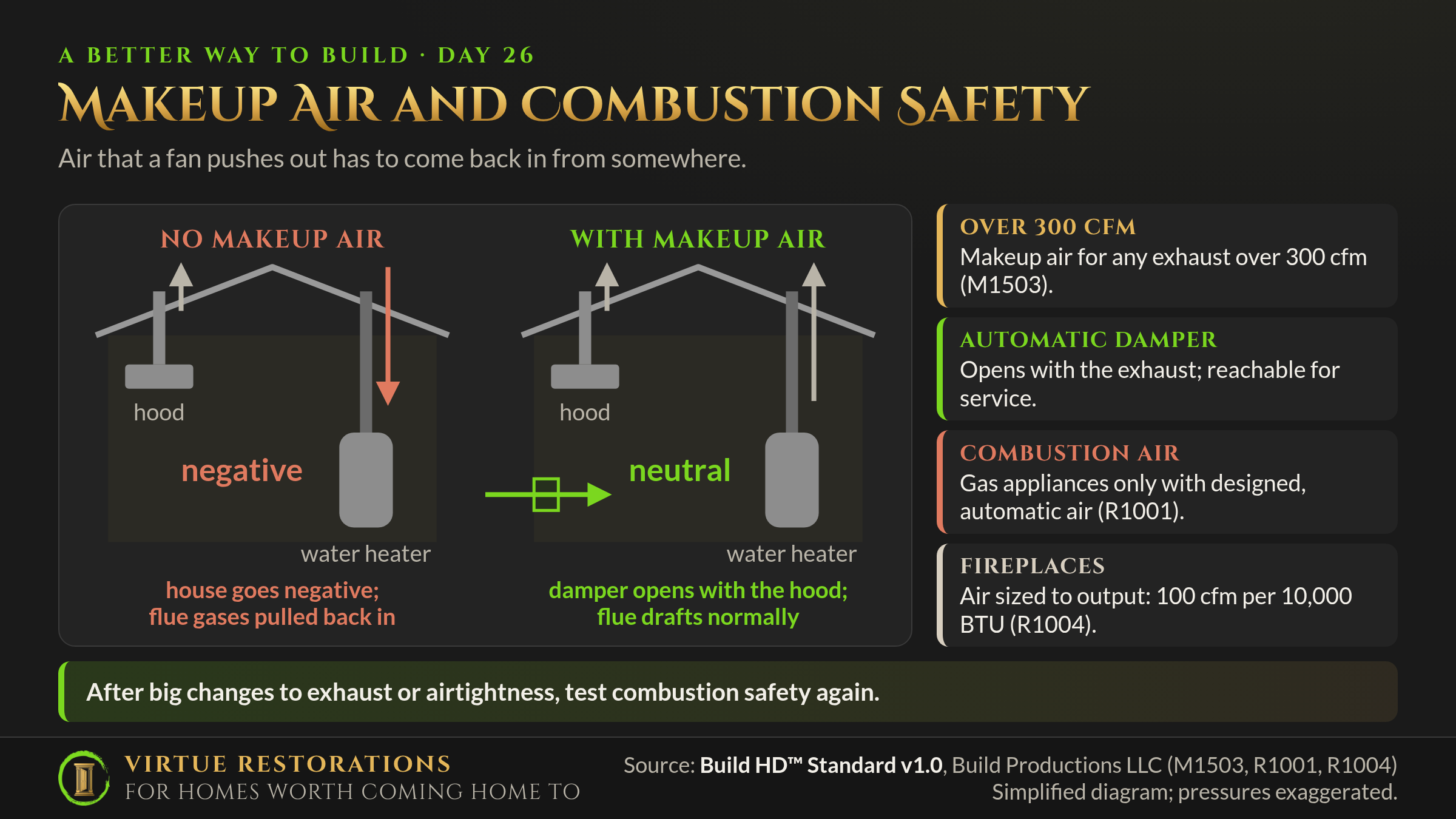
In a leaky old house, the replacement air comes in through cracks. In a tighter house, or when the fan is big enough, the house goes slightly negative in pressure, and the air comes in wherever it can. Sometimes that's down the chimney or flue of a furnace, water heater, or fireplace, bringing exhaust gases with it.
The problem
Many fuel-burning appliances rely on natural draft: hot exhaust rises up the flue on its own. That draft is gentle, and it can be overpowered.
A typical bath fan moves a modest amount of air. A clothes dryer moves more. A large range hood over a professional-style range can move several hundred cfm (cubic feet per minute) or more. Run that hood in a tight house, and it can reverse the draft of a nearby gas water heater or fireplace. This is called backdrafting.
The EPA lists back-drafting from furnaces, gas water heaters, wood stoves, and fireplaces among the sources of carbon monoxide in homes, and notes that pollutants from fireplaces and woodstoves without a dedicated outdoor air supply can be back-drafted into the living space, particularly in weatherized homes.
What the code requires
According to the Build HD™ Standard, the model code requires makeup air for kitchen exhaust above roughly 400 cfm, but broader appliance makeup air is not always required. It permits combustion appliances with required clearances and venting, and requires factory-built fireplaces to be listed and, in some cases, supplied with outside combustion air.
What Build HD calls for
Build HD, published by Build Productions LLC (the team behind Matt Risinger's The Build Show), is far stricter across three entries:
- M1503, makeup and combustion air: filtered, controlled makeup air for any exhaust over 300 cfm, counting dryer exhaust and cooktop venting; electronically operated dampers that open automatically when the exhaust runs and stay accessible for service. Build HD also calls for forced exhaust ventilation for gas appliances sized at 100 cfm per 10,000 BTU.
- R1001, combustion appliances: no combustion appliances unless active, automatic makeup and combustion air is installed, sized and placed with guidance from a design professional.
- R1004, fireplaces: combustion air sized to output, 100 cfm per 10,000 BTU, vented directly into the firebox; fireplaces over 30,000 BTU also get makeup air at the same rate, easy to activate when lighting a fire; automatic ventilation controlled so the room stays neutral or positive in pressure.
Code minimum
Build HD™ calls for
Why it works
Makeup air balances the fan. A makeup air system is a dedicated, filtered opening to the outdoors with a motorized damper. When the hood turns on, the damper opens and lets in roughly as much air as the hood removes, so the house stays near neutral pressure and the flue keeps drafting up.
Automatic beats remembering. A window you're supposed to crack open when you cook works only if someone remembers. A damper wired to the hood works every time.
Designed combustion air protects the appliance. Furnaces, water heaters, and fireplaces need a steady supply of air to burn cleanly and vent safely. Designing that air in, instead of relying on leaks, keeps them safe as the house gets tighter.
Sealed combustion sidesteps the problem. Appliances that draw combustion air from outdoors through a dedicated pipe and vent through another, or electric appliances, aren't affected by house pressure the same way.
What it means when Virtue remodels your existing home
This post connects directly to the combustion safety commitment we made in Week 3 (Day 14): when we make significant changes to how a house breathes, we check that its fuel-burning appliances still vent safely.
- Big hoods get a makeup air plan. When a kitchen remodel includes a range hood over 300 cfm, following Build HD, we'll design makeup air with an automatic damper into the project, not leave it for later.
- Count every fan. We look at the hood, dryer, bath fans, and any other exhaust together, because they can run at the same time.
- Test combustion safety after big changes. After adding a large exhaust fan, significant air sealing, or a tighter envelope, we have fuel-burning appliances tested for safe drafting and carbon monoxide under worst-case conditions. If something fails, we fix it before we call the job done.
- Talk through appliance choices. When a gas water heater, furnace, or fireplace is due for replacement, we'll discuss sealed-combustion and electric options alongside makeup air.
- CO alarms. We'll recommend carbon monoxide alarms following the EPA's placement guidance: on every level of the home's living space (including the basement), near sleeping areas, and near the door to an attached garage.
- Use the hood. The EPA recommends using a range hood vented to the outdoors whenever you cook and leaving it on for 10 to 20 minutes afterward. We'll show you how the makeup air works so you're not tempted to leave the hood off.
The virtue behind it
This post reflects Valor, the courage to tell the truth and do the hard right work. A beautiful new range hood is exciting. Telling a homeowner it needs a makeup air system, a test, and maybe an appliance change isn't. But carbon monoxide is invisible, and we'd rather have that conversation now than leave a hidden risk behind.
The combustion safety check after adding big exhaust or significant air sealing, and our CO alarm recommendation, sit on our integrity floor, in every path. A makeup air system with a large hood typically fits Reform or Reimagine. This mapping is provisional while we finalize it across Rebuild, Reform, and Reimagine.
Dreaming of a big range and hood? Reach Jacob at Jacob@virtuerestorations.com or (513) 568-5819. We serve Boone, Kenton, Campbell, and Grant counties.
Example illustration, not a Virtue Restorations project