
A Better Way to Build · Day 9 of 30
Windows Done Right: Sill Pans and Head Flashing
Windows are where walls leak most often. Why Build HD calls for sloped sill pans, shingle-lapped flashing, and a water test before the siding goes on.
- VALOR
- BUILD HD™: R609 Exterior Windows & Doors
If you've ever pulled up carpet under a window and found dark, stained subfloor, or watched paint bubble on the drywall below a sill, you've seen the most common leak in a house.
Windows and doors are holes in the wall. Every one of them has joints where the frame, the wall, the siding, and the trim all come together, and water is very good at finding joints.
The problem
Most window leaks don't come through the glass. They come around the frame, especially at the bottom corners. Water that gets past the siding or the window's own seals runs down to the sill, and without a way out, it soaks into the framing below.
Here's what makes it worse: once the siding and trim are on, you can't see whether it was done right. A window can leak into the wall for years before anything shows on the inside.
What the code requires
The model code requires exterior openings to be flashed to shed water and windows to hit energy limits for U-factor and solar heat gain. According to the Build HD™ Standard, the code does not require sloped sill pans, thermally broken frames, or restrictions on frame materials.
What Build HD calls for
Build HD, published by Build Productions LLC (the team behind Matt Risinger's The Build Show), makes its R609 window and door entry one of the most detailed in the standard. The water-management parts call for:
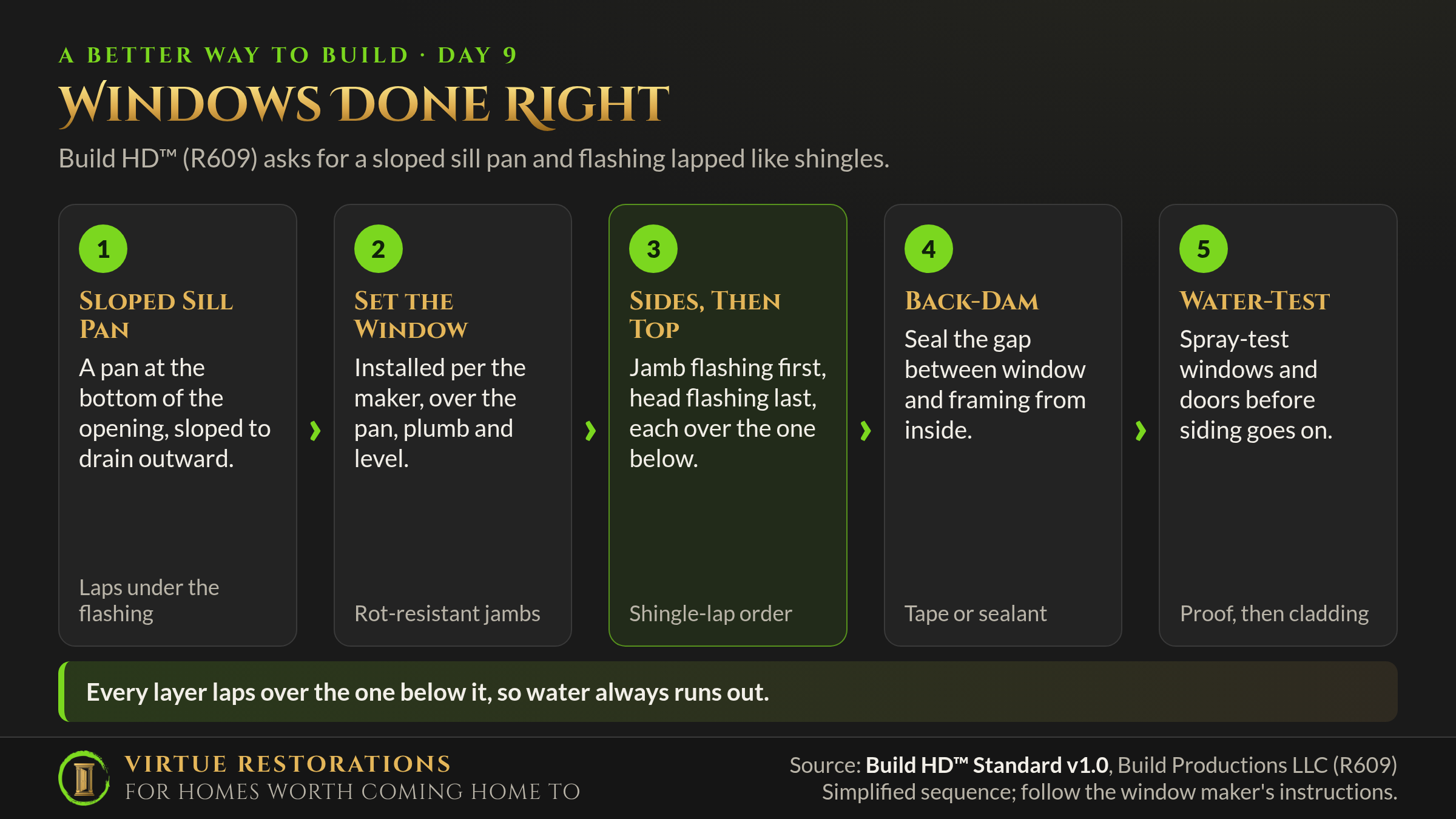
- A sloped sub-sill pan under every window and door, lapped under the flashing around the opening, so anything that gets in drains back out.
- Back-damming: once the unit is set, the gaps between the jambs and the rough framing are sealed with tape or caulk.
- Head flashing wherever the eave or overhang is more than 4 feet above the top of the window, which tells you how much Build HD trusts a good overhang (Day 6).
- Rot-resistant jambs and thresholds.
- A water test of windows and exterior doors with a hose or spray system before the siding goes on.
The entry also covers thermally broken frames, insulated garage doors, limits on total glass area, and material rules such as vinyl, fiberglass, composite, or aluminum windows inside tubs and showers. We'll come back to the energy side in later weeks.
Code minimum
Build HD™ calls for
Why it works
Good window flashing follows one rule: shingle-lap everything. Every layer overlaps the layer below it, the way shingles do on a roof, so water running down the wall always lands on the outside of the next layer.
That's why the order matters. The sill pan goes in first, then the window, then the side (jamb) flashing, then the head flashing, with the housewrap above lapped over the top. Get the order backward and you've built a funnel that sends water behind the wall.
The sloped pan is the safety net. It assumes that someday, some water will get past the window's seals. When it does, the pan catches it and the slope carries it back outside instead of letting it soak into the framing.
The water test is about proof. Spraying the window before siding goes on means a mistake shows up while it's still cheap to fix.
What it means when Virtue remodels your existing home
Window replacement is where this matters most for existing homes.
- Every window and exterior door we replace gets a sloped sill pan and properly lapped flashing. We committed to this in Day 2, and it's the heart of R609.
- We'll explain your options honestly. An "insert" replacement that leaves the old frame and siding in place can't get a true pan and full flashing. When the existing frame is rotted or leaking, we'll recommend removing it down to the rough opening so it can be done right, and we'll explain the cost difference.
- We open up suspicious sills. If we see stains, soft wood, or swollen trim under a window, we investigate before installing anything new over it.
- We seal from the inside. Gaps between the new window and the framing get back-dammed with tape or sealant, following the window maker's instructions.
- We test before we cover. When the opening is exposed, we water-test new windows and doors before the trim and siding go back on, and we photograph the flashing for your records.
The virtue behind it
This post reflects Valor, the courage to tell the truth and do the hard right work. It would be quicker to slide in a replacement window, caulk the edges, and leave. Telling you when a window needs to come out to the framing, and then doing the extra work, takes more nerve and more time. It's also the right thing to do.
Sill pans and proper flashing sit on our integrity floor in every path: Rebuild, Reform, and Reimagine. The paths change the window you choose, not whether it's flashed right.
Planning to replace windows or doors? Reach Jacob at Jacob@virtuerestorations.com or (513) 568-5819. We serve Boone, Kenton, Campbell, and Grant counties.
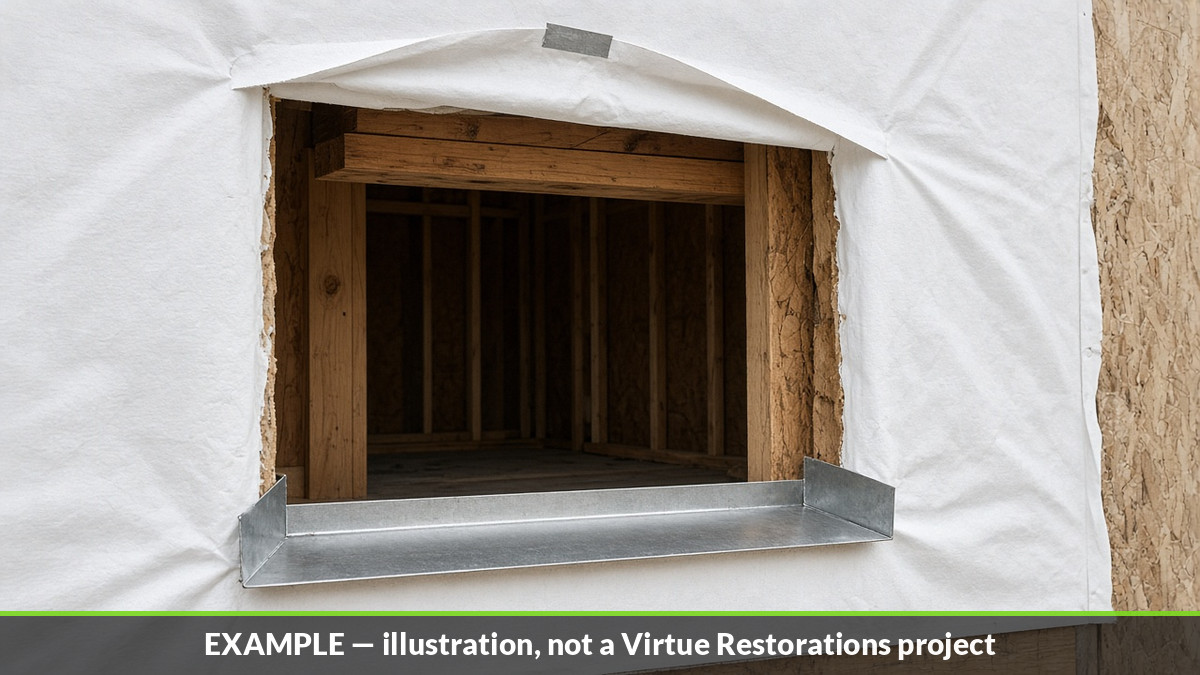
Example illustration, not a Virtue Restorations project