
A Better Way to Build · Day 18 of 30
Attics: Where Mechanicals Don't Belong
Furnaces and ducts in a hot, vented attic waste energy and invite condensation. Why Build HD allows a vented attic only when nothing mechanical is in it.
- EXCELLENCE
- BUILD HD™: R301 Structure & Envelope Design Intent (attics) · R902 Exterior Ceilings & Soffits
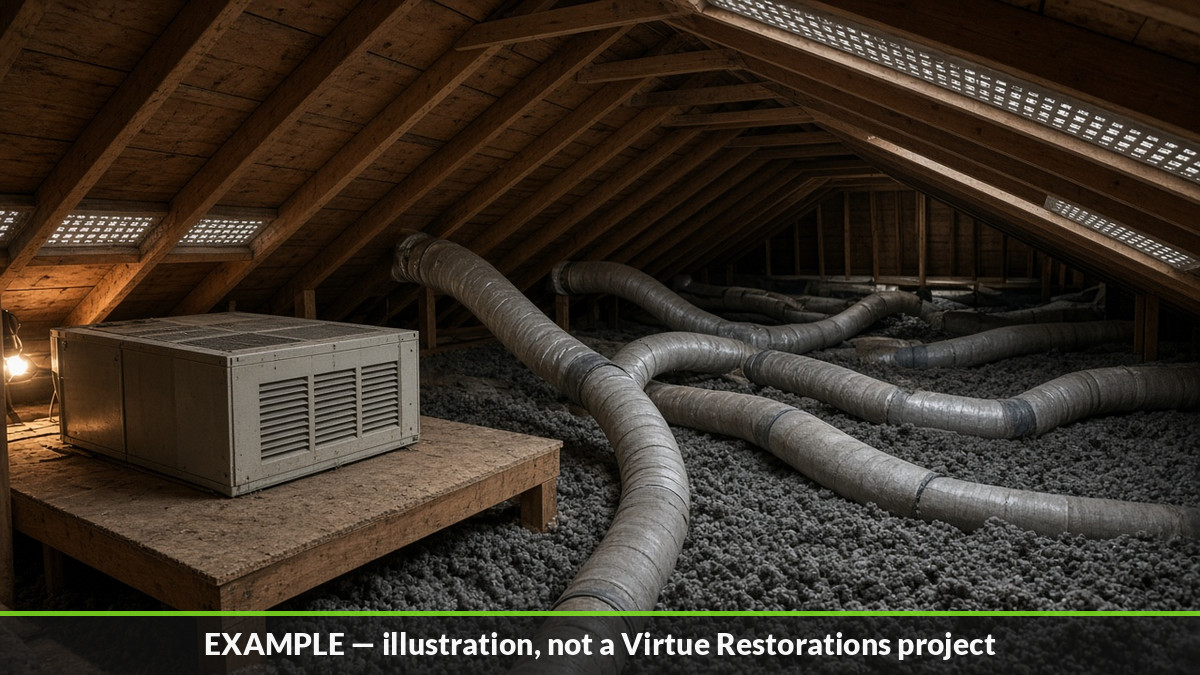
On a sunny July afternoon in Northern Kentucky, a vented attic can get far hotter than the outdoor air. In January, it can be nearly as cold as outside. Now picture the equipment many homes put up there: a furnace or air handler, the main duct trunk, sometimes even water lines.
We'd never install a furnace on the roof and run ducts across the shingles. But putting them in a vented attic isn't so different.
The problem
When ducts run through a vented attic, every leak in them pushes conditioned air you paid for outside the house, or pulls hot, dusty attic air into it. Even sealed ducts lose heat through their walls to the extreme attic temperatures. In summer, cold supply ducts in a hot, humid attic can sweat, dripping water onto the ceiling below. In winter, water lines in an attic can freeze.
There's another cost: the ceiling below has to be cut open for every duct boot, light, and access panel. Each hole is a path for warm, moist indoor air into the attic, which can lead to frost on the roof sheathing and moisture damage over time.
What the code requires
According to the Build HD™ Standard field card, the model code sets minimum loads and prescriptive envelope provisions, but it doesn't require a continuously defined conditioned envelope. Ducts and equipment are allowed in vented attics. The code requires attic and soffit ventilation, but not fire-rated screening behind the vents.
What Build HD calls for
Build HD, published by Build Productions LLC (the team behind Matt Risinger's The Build Show), addresses attics in two places:
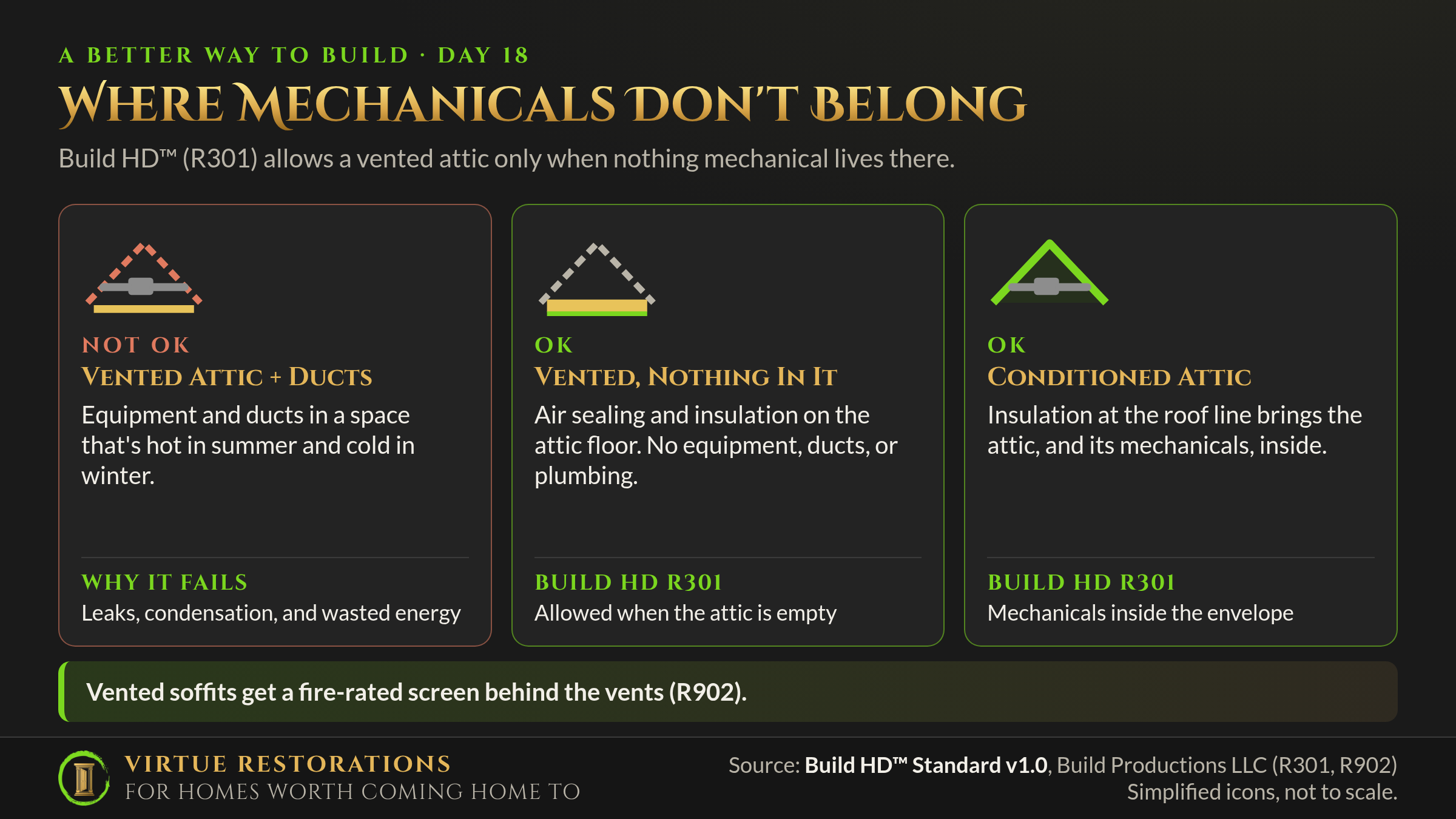
- R301, envelope design intent: vented or unconditioned attics are allowed only where no mechanical or plumbing equipment or distribution sits in them. Where equipment belongs up high, the attic should be conditioned and inside a clearly defined envelope, with easy access for service.
- R902, exterior ceilings and soffits: enclosed soffits and ceilings outside the envelope should be vented with a fire-rated screen behind the venting. Where combustible cladding is used on a porch ceiling or eave, Build HD calls for a sealed 1-hour fire-rated layer first.
Code minimum
Build HD™ calls for
Why it works
There are two good ways to build an attic, and Build HD allows both:
- A vented attic with nothing in it. The air barrier and insulation sit on the attic floor, the ceiling is well sealed, and the attic is ventilated to stay close to outdoor conditions. Nothing up there cares how hot or cold it gets.
- A conditioned attic. The insulation and air barrier move up to the roof line, so the attic becomes part of the inside of the house. Equipment and ducts up there sit in mild, conditioned air, and any duct leaks stay inside the envelope.
The problem is the hybrid that's common in many homes: a vented attic with equipment and ducts in it. It gets the worst of both.
The fire-rated screens in R902 deal with a different risk. Soffit vents can let embers or flames from an exterior fire reach the attic, and a fire-rated screen or a fire-rated layer helps slow that path.
What it means when Virtue remodels your existing home
Moving ductwork isn't a small job, and we won't pretend every home should do it. Here's how we approach attics:
- Seal the attic floor. When we work in an attic, we seal the gaps between the living space and the attic (top plates, light fixtures, wires, pipes, and the hatch) before adding insulation.
- Seal and insulate ducts we touch. If ducts stay in a vented attic, every duct we work on gets sealed at the joints and insulated.
- No new plumbing in a vented attic. We won't route new water lines through an unconditioned attic.
- Plan mechanicals inside when we can. When you're replacing HVAC equipment, adding a story, or renovating the whole house, we'll talk through moving equipment and ducts inside the envelope, or conditioning the attic.
- Ventilate carefully. When we replace soffits or vents, we'll recommend products with fire-rated or ember-resistant screening, guided by R902.
- Check safety after changes. Sealing an attic floor tightens the house, so the combustion safety check from Day 14 applies here too.
The virtue behind it
This post reflects Excellence, our love of good work. Excellence isn't just craftsmanship you can see. It's also the judgment to put things where they belong, so the system works well and stays easy to service for the next 30 years.
Air sealing the attic floor and sealing the ducts we touch sit on our integrity floor, in every path. Relocating equipment or conditioning the attic typically fits Reform or Reimagine. This mapping is provisional while we finalize how Build HD items sit across Rebuild, Reform, and Reimagine.
Have a furnace or ducts in your attic? Reach Jacob at Jacob@virtuerestorations.com or (513) 568-5819. We serve Boone, Kenton, Campbell, and Grant counties.
Example illustration, not a Virtue Restorations project