
A Better Way to Build · Day 22 of 30
Wet-Area Materials That Survive
In kitchens and baths, the materials decide whether a splash or small leak is a non-event or a tear-out. The wet-area materials Build HD calls for, and the ones it rules out.
- EXCELLENCE
- BUILD HD™: R702 Shower/Tub Wall Preparation · R702.3 Gypsum Wall Board · R702 Paint / Sealants · R609 Windows in tubs and showers · Ref Interior Finish Carpentry · Ref Grouts & Thinsets · Ref Floor Tile
Bathrooms and kitchens take a beating. Showers run every day. Sinks splash. Toilets sweat and occasionally overflow. Mop water runs along the baseboards. Over 20 or 30 years, the materials in these rooms see more water than anywhere else in the house.
Most of the time, that water is harmless if it lands on the right materials. On the wrong ones, a small splash can mean swollen trim, cracked tile, or a soft, moldy wall.
The problem
Wet-area failures usually come down to materials that can't handle water being used where water is certain to show up:
- Shower walls with no real waterproofing. Tile and grout aren't waterproof. Water that gets past them soaks whatever is behind.
- Grout that absorbs water. Standard cement grout is porous. It stains, can grow mildew, and needs sealing to resist water.
- Floor tile that cracks. Wood subfloors move with temperature, humidity, and loads. Tile bonded tightly to a moving floor can crack, and so can its grout lines.
- Trim that swells. MDF (medium-density fiberboard) is smooth, stable, and inexpensive, but when water reaches an unsealed edge or a nail hole, it swells and doesn't come back.
- Wood windows inside the shower. A window in the spray zone is soaked every day. Wood frames there rot.
What the code requires
According to the Build HD™ Standard, the model code requires gypsum board suited to its location and moisture-resistant backing behind tile at tubs and showers. It does not require epoxy grout, a decoupling membrane under floor tile, restrictions on MDF trim, or particular window materials in showers.
What Build HD calls for
Build HD, published by Build Productions LLC (the team behind Matt Risinger's The Build Show), calls for these wet-area materials:
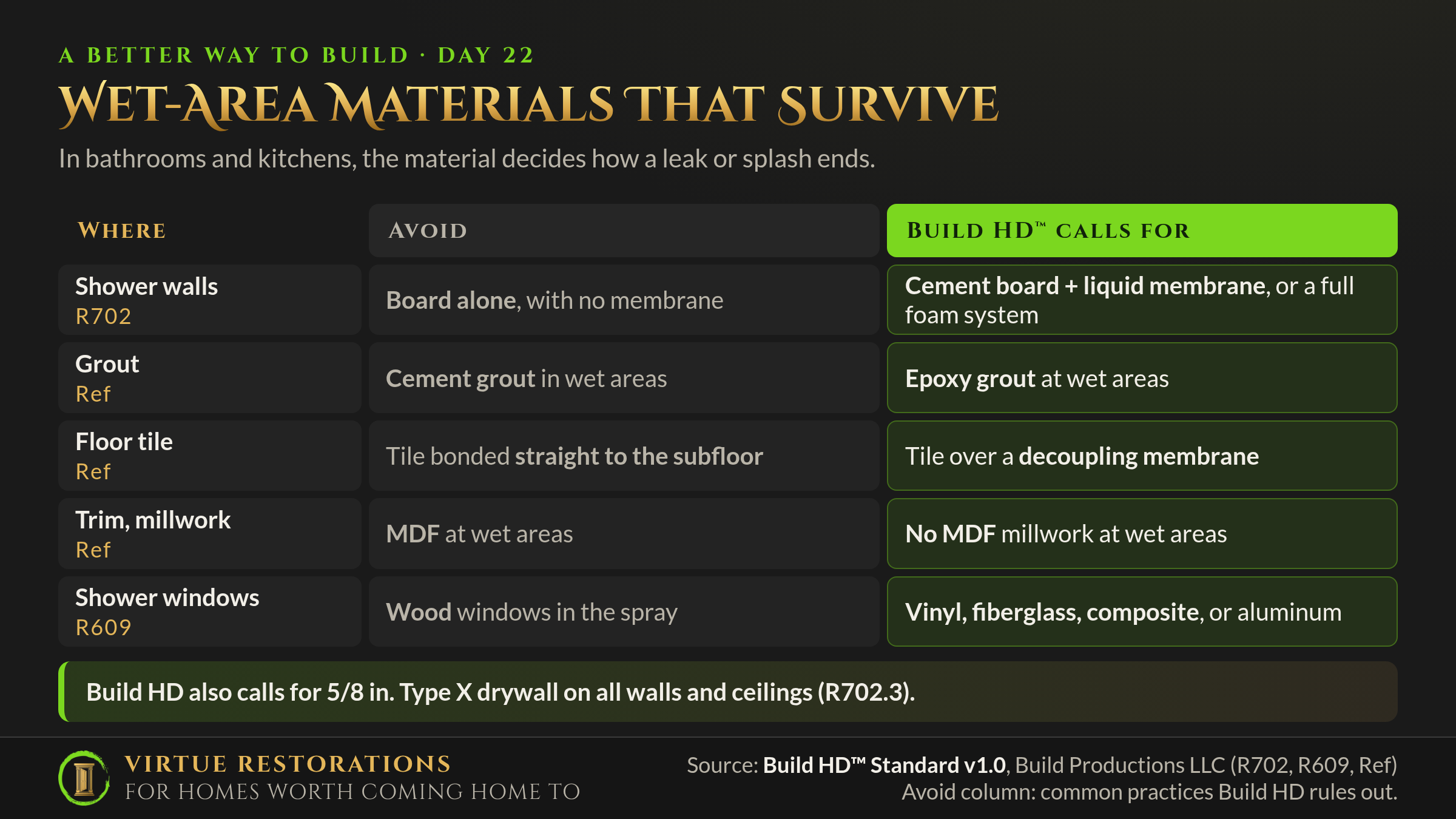
- Shower and tub walls (R702): cementitious backer board with a liquid membrane, or a complete foam backer board system.
- Grout (Ref, Grouts & Thinsets): epoxy grout at wet areas.
- Floor tile (Ref, Floor Tile): installed over a decoupling (slip) membrane.
- Finish carpentry (Ref): no MDF millwork at wet areas.
- Windows in tubs and showers (R609): vinyl, fiberglass, composite, or aluminum.
- Drywall (R702.3): 5/8-inch Type X drywall on all walls and ceilings, not only where the code requires it.
- Paint (R702): high-quality, 100% acrylic paints with mildew-resistant additives, and low or no VOC products for all inside coatings.
Code minimum
Build HD™ calls for
Why it works
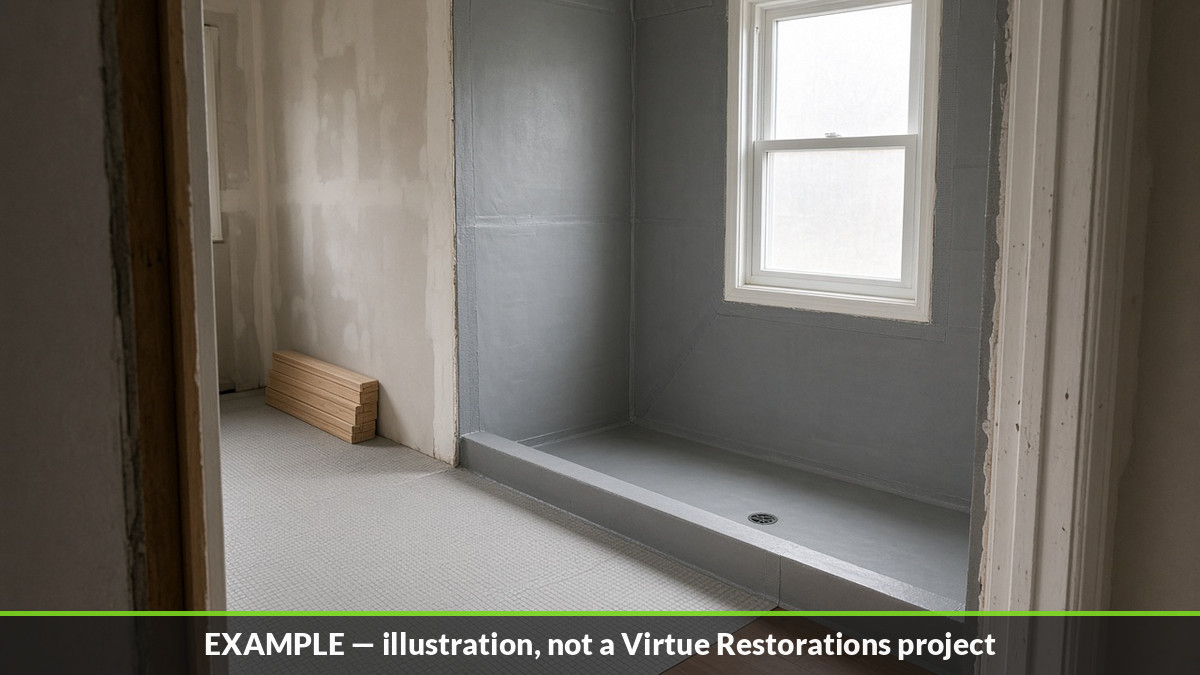
A membrane makes the wall waterproof, not just water-resistant. Cement board doesn't fall apart when it gets wet, but water passes through it. A liquid membrane on the board, or a foam board system with sealed seams, stops water at the surface of the wall (Day 21).
Epoxy grout doesn't soak up water. Epoxy grout is far less porous than cement grout, so it resists staining and mildew without regular sealing. It costs more and takes more skill to install, which is why it's often skipped.
A decoupling membrane lets the floor move without cracking the tile. The membrane sits between the subfloor and the tile and absorbs small movements, so they don't transfer up into the tile and grout.
Water-tolerant trim stays straight. Solid wood, sealed on all sides, or other moisture-tolerant materials hold up to splashes and mopping where MDF swells.
Non-wood windows don't rot. In a shower, a vinyl, fiberglass, composite, or aluminum window can be soaked daily without damage.
Better drywall and paint add durability. Thicker 5/8-inch Type X drywall is stiffer and more fire-resistant. A good acrylic paint with mildew resistance helps bathroom walls and ceilings stand up to steam.
What it means when Virtue remodels your kitchen or bathroom
This is where most of our work happens, so here's what you'll see on our jobs:
- Every shower waterproofed as a system. Backer board with a liquid membrane, or a complete foam board system. No plain drywall or "green board" behind shower tile.
- Epoxy grout offered for showers. We'll include epoxy grout as our recommended option for shower walls and floors and explain the cost difference.
- A decoupling membrane under floor tile. On tile floors over wood subfloors, we install a decoupling membrane.
- No MDF at wet areas. We don't install MDF baseboard, casing, or trim in bathrooms, laundry rooms, or at kitchen sinks. We'll also point out what your vanity and sink-base cabinets are made of, so you can choose.
- Non-wood windows in showers. If a shower has a window, we'll recommend replacing a wood window with a vinyl, fiberglass, composite, or aluminum one during the remodel.
- Better drywall and paint. We'll offer 5/8-inch Type X drywall where we hang new board, and we use 100% acrylic, low or no VOC paints inside the home.
The virtue behind it
This post reflects Excellence, our love of good work. The difference between a bathroom that looks great on day one and one that still looks great in year twenty is mostly in the materials you can't see, or don't think about. Choosing them well is part of doing the work right.
Waterproofed shower walls, no MDF at wet areas, and decoupling membranes under floor tile sit on our integrity floor, in every path. Epoxy grout and 5/8-inch Type X drywall are options from Rebuild up. This mapping is provisional while we finalize it across Rebuild, Reform, and Reimagine.
Planning a bathroom or kitchen? Reach Jacob at Jacob@virtuerestorations.com or (513) 568-5819. We serve Boone, Kenton, Campbell, and Grant counties.
Example illustration, not a Virtue Restorations project